1.
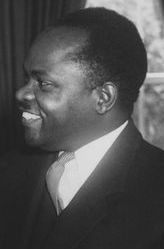
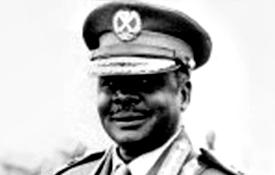
Benedicto Kiwanuka
Prime Minister of Uganda
1961
General elections were held in Uganda on 23 March 1961.[1] They were the first time direct elections to the Legislative Council had been held across the entire country. The result was a victory for the Democratic Party, which won 44 of the 82 seats (excluding Buganda)
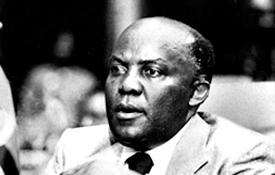
2.
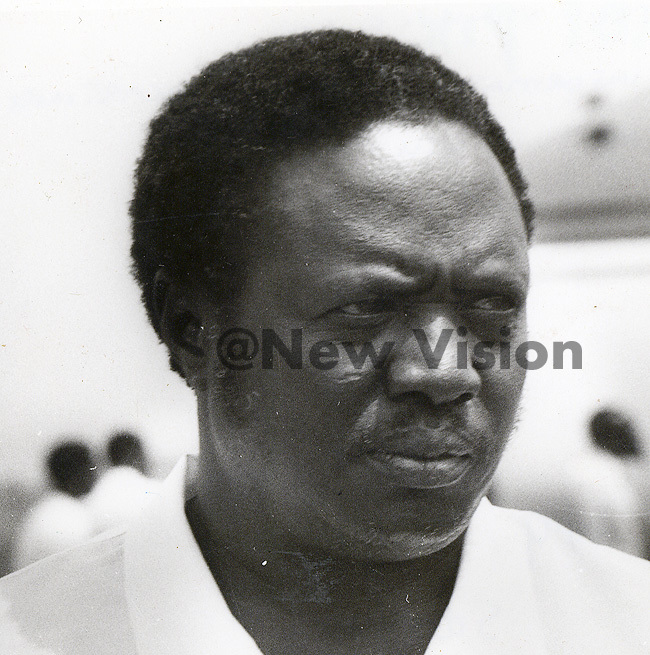
Benedicto Kiwanuka
Prime Minister of Uganda
1962
As a result of the September 1961 Uganda Constitutional Conference held in London, Uganda achieved internal self-government on 1 March 1962. Kiwanuka became Uganda's first Chief Minister in the new National Assembly
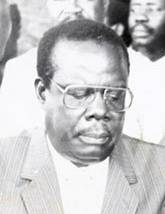
3.
Apollo Milton Obote
Prime Minister of Uganda
1962
General elections were held in Uganda on 25 April 1962 in preparation for independence on 9 October. However, elections were not held in all parts of the country, with the Parliament of Buganda nominating 21 members (all of whom belonged to the Kabaka Yekka party) to the national parliament instead. The result was a victory for the Uganda People's Congress, which won 37 of the 82 seats,[1] and went on to form an alliance with Kabaka Yekka.
4.
Elizabeth II
President of Uganda
1962
Uganda gained its independence from Britain, marking the end of colonial rule and the beginning of self-governance
5.
Apollo Milton Obote
Prime Minister of Uganda
1963
Uganda became a republic within the Commonwealth. Though it was refered to as a state (Sovereign State) rather than a republic. Kabaka Mutesa became president (head of state) replacing Queen Elizabeth II and thus cutting Uganda's ties with the British monarchy. Upto 1966 Uganda was an Elective monarchy.
6.
Muteesa II
President of Uganda
1963
Uganda became a republic within the Commonwealth. Though it was refered to as a state (Sovereign State) rather than a republic. Kabaka Mutesa became president (head of state) replacing Queen Elizabeth II and thus cutting Uganda's ties with the British monarchy. Upto 1966 Uganda was an Elective monarchy.
7.
Apollo Milton Obote
Prime Minister of Uganda
1966
Following the events of the Kabaka Crisis (1966). Obote Abolished the constitution and declared himself president. He allocated himself almost unlimited power under state of emergency rulings. Several members of his cabinet, who were leaders of rival factions in the party, were arrested and detained without charge. Obote responded with an armed attack upon Mutesa's palace, which ended with Mutesa fleeing to exile
8.
Apollo Milton Obote
President of Uganda
1966
Following the events of the Kabaka Crisis (1966). Obote Abolished the constitution and declared himself president. He allocated himself almost unlimited power under state of emergency rulings. Several members of his cabinet, who were leaders of rival factions in the party, were arrested and detained without charge. Obote responded with an armed attack upon Mutesa's palace, which ended with Mutesa fleeing to exile
9.
Apollo Milton Obote
President of Uganda
1966
Obote announced a new constitution that would give him executive powers as the Executive President, abolished the positions of vice president and prime minister.
10.
Idi Amin
President of Uganda
1971
The 1971 coup d'état in Uganda was the military overthrow of president Milton Obote's government. The coup was staged by major general Idi Amin Dada, commander of the Uganda Army. The seizure of power occurred on January 25 while Obote was attending the Commonwealth Heads of Government Meeting in Singapore
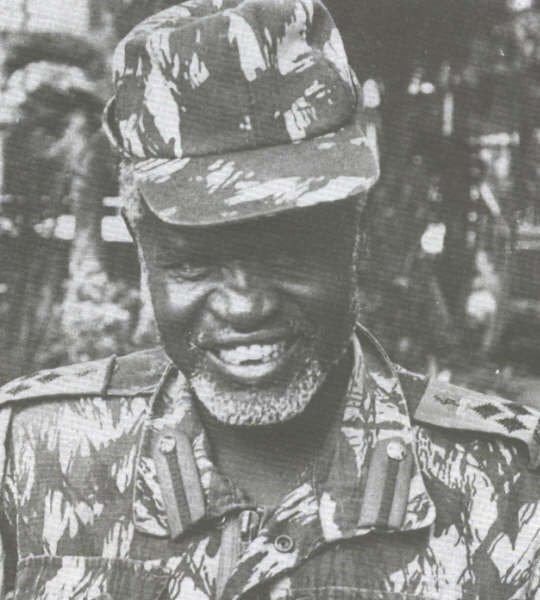
11.
Yusuf Lule
President of Uganda
1979
Part of the (Uganda–Tanzania War). was a battle during the Uganda–Tanzania War in 1979, in which the combined forces of Tanzania and the Uganda National Liberation Front (UNLF) attacked and captured the Ugandan capital, Kampala. As a result, Ugandan President Idi Amin was deposed, his forces were scattered, and a UNLF government was installed.
12.
Godfrey Binaisa
President of Uganda
1979
On June 20, 1979, the NCC staged a coup, removing Lule as president for allegedly making wide ranging appointments in government without consulting them. Subsequently, Godfrey Binaisa was named as his successor.
13.
Otema Allimadi
Prime Minister of Uganda
1980
General elections were held in Uganda on 10 and 11 December 1980. They followed the overthrow of Idi Amin the previous year and were the first since the pre-independence elections in 1962. The result was a victory for the Uganda People's Congress (UPC) of President Milton Obote, which won 75 of the 126 seats. Voter turnout was 85%. The opposition claimed wide spread fraud and some took up arms eg the NRA.
14.
Paulo Muwanga
President of Uganda
1980
When Binaisa sought to curb the use of these militias, which were harassing and detaining political opponents, he was overthrown in a military coup on 10 May 1980
15.
Apollo Milton Obote
President of Uganda
1980
General elections were held in Uganda on 10 and 11 December 1980. They followed the overthrow of Idi Amin the previous year and were the first since the pre-independence elections in 1962. The result was a victory for the Uganda People's Congress (UPC) of President Milton Obote, which won 75 of the 126 seats. Voter turnout was 85%. The opposition claimed wide spread fraud and some took up arms eg the NRA.
16.
Paulo Muwanga
Prime Minister of Uganda
1985
General elections were held in Uganda on 10 and 11 December 1980. They followed the overthrow of Idi Amin the previous year and were the first since the pre-independence elections in 1962. The result was a victory for the Uganda People's Congress (UPC) of President Milton Obote, which won 75 of the 126 seats. Voter turnout was 85%. The opposition claimed wide spread fraud and some took up arms eg the NRA.
17.
Abraham Waligo
Prime Minister of Uganda
18.
Bazilio Olara-Okello
President of Uganda
1985
The 1985 Ugandan coup d'état was an ethnically motivated military takeover in Uganda involving dissident Acholi elements within the Uganda National Liberation Army (UNLA), led by Brigadier Basilio Olara Okello, which successfully ousted the second Milton Obote government
19.
Tito Okello
President of Uganda
20.
Samson Kisekka
Prime Minister of Uganda
1986
Part of the Ugandan Bush War. The Battle of Kampala was a battle of the Ugandan Bush War that took place from 17 to 26 January 1986 in which forces of the National Resistance Army (NRA) attacked and captured the Ugandan capital, Kampala, from the Uganda National Liberation Army (UNLA). As a result, the Ugandan government was deposed and replaced by a new one under NRA leader Yoweri Museveni
21.
Yoweri Museveni
President of Uganda
1986
Part of the Ugandan Bush War. The Battle of Kampala was a battle of the Ugandan Bush War that took place from 17 to 26 January 1986 in which forces of the National Resistance Army (NRA) attacked and captured the Ugandan capital, Kampala, from the Uganda National Liberation Army (UNLA). As a result, the Ugandan government was deposed and replaced by a new one under NRA leader Yoweri Museveni
22.
George Cosmas Adyebo
Prime Minister of Uganda
23.
Kintu Musoke
Prime Minister of Uganda
1994
Constituent Assembly elections were held in Uganda on 28 March 1994 to elect 214 of the 284 members of an Assembly tasked with drawing up the country's new constitution
24.
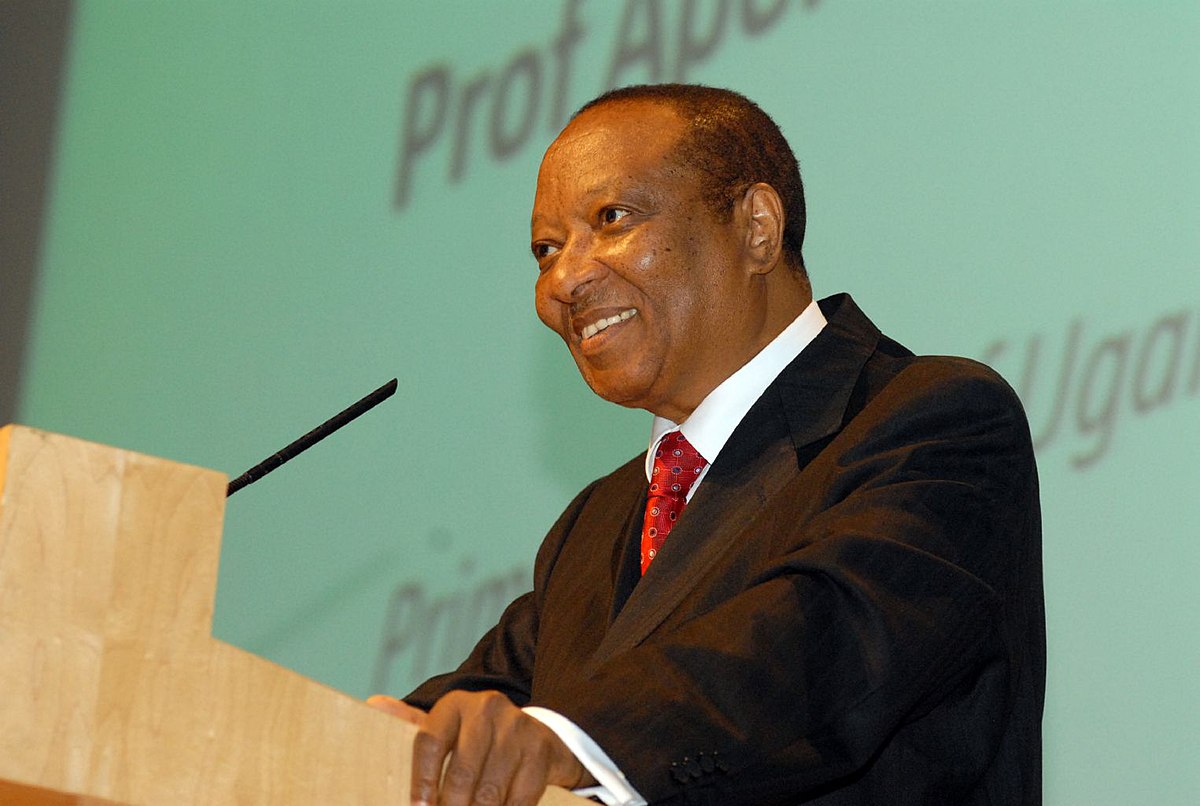
Apolo Nsibambi
Prime Minister of Uganda
25.
Amama Mbabazi
Prime Minister of Uganda
26.
Ruhakana Rugunda
Prime Minister of Uganda
27.
Robinah Nabbanja
Prime Minister of Uganda
2021
General elections were held in Uganda on 14 January 2021 to elect the President and the Parliament.[1][2] The Electoral Commission announced Incumbent President Yoweri Museveni, the incumbent ruling since 1986, as the winner with 58.64% of the votes